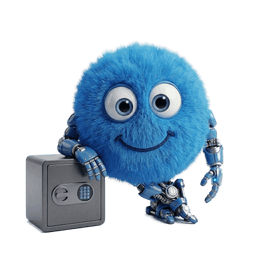
Everything on-device
A full assistant. Zero cloud.
Every capability below is processed by AI models running locally on your device.
Private chat
Conversations run against an AI model on your own machine. Nothing you type is sent to hYYa servers or any third-party cloud AI.
Memory
hYYa Vault remembers your preferences and context across conversations — stored only on your device, editable anytime.
Personas
Give the assistant a distinct personality or expert role for sharper answers — all running locally.
Construction take-off
Measure real quantities off a vector PDF or an AutoCAD DXF — per-layer lengths, block counts, drag-a-box areas — straight to Excel. Curved line-work is measured, not shortcut across, and anything it can't measure is stated on the take-off. (A binary .dwg isn't read on-device: save it as DXF first, or use hYYa Cloud.)
Studio exports, on-device
Turn your documents into a finished Word report, a multi-sheet Excel workbook with live formulas, a PowerPoint with native editable charts, or a self-contained interactive dashboard — every figure checked against the source, all built locally.
Document understanding
Drop in PDFs, photos, and files. hYYa Vault reads and reasons over them with a local model — your documents stay yours.
Local by default
All inference, history, and files live on your device. Delete the app and everything is gone — there is no server copy.
The privacy boundary
Nothing you type ever touches the network.
In hYYa Vault mode, your conversations, documents, memory and files never reach hYYa servers or any third-party cloud AI — the model runs on your own machine. hYYa Vault publishes the complete, audited list of every connection it can make — eight in total, grouped below. Everything optional is off until you switch it on, behind its own named consent card. Install a model, turn Wi-Fi off, and the assistant keeps working.
Getting models onto your Mac
Downloading the AI models you choose, refreshing the signature-verified model catalogue, and validating a model you add by name. Downloads only — nothing of yours is uploaded, and once a model is on your Mac it runs with the Wi-Fi off.
The optional online features — off until you turn them on
Web Search sends only the message you typed for that turn. Connections make read-only requests for the app data a turn needs. Your own API keys (BYOK) send the key you saved plus prompts for turns run on that model. Each shows a named consent card before it can be switched on, and the app enforces a hard allowlist of where they may talk.
Signing in, and switching to hYYa Cloud
Signing in to hYYa Cloud (optional) sends your email and account id, then periodic plan checks. Switching to Cloud mode is exactly that — you're using the cloud app, and its own terms apply. Stay signed out and neither happens.
That's the whole list. Connected-account data is read directly from your own Google or Microsoft account to your device, processed on-device, and is never transmitted to or stored on hYYa servers — see the Privacy Policy for the full commitment.
hYYa Vault — free, no account
Everything on this page runs on your Mac and costs nothing — there is no Vault subscription, no one-time unlock, and no account needed to chat, read your documents, build exports or measure a drawing.Signing in to a hYYa Cloud account is optional — creating one costs nothing — and only adds the features that genuinely need the internet: Web Search and Connections work without a paid plan; using your own API keys needs Ultra.
hYYa Cloud — the cloud companion
When you want the world's most powerful cloud AI models, hYYa Cloud remains available with a paid plan — same app, clearly separated from hYYa Vault. What happens in hYYa Vault stays in hYYa Vault.
hYYa Vault is out now in the hYYa ai Mac app — Free — no account needed (Apple silicon · macOS 26+). iOS and Android are in development.